Updated
A leaking connection may look similar in a house and a business, but the repair plan can be very different. In an occupied commercial property, a water shutdown may affect staff, tenants, customers or equipment across several spaces.
Need help with your property? Request an estimate.
Start with how the building is used
Describe the activity in the affected area and any restrictions on downtime. A home may need a working bathroom during a renovation; a business may have opening hours, tenant notice arrangements or specialized equipment that must stay in service.
Identify access and authority
Name the person who can approve the work and the person who can provide access. These may be different people. Tell the contractor about keys, loading areas, restricted spaces and any building procedures before the visit.
Define the systems in scope
List the fixtures and equipment involved instead of relying only on the label “commercial plumbing.” Specialized uses need the appropriate assessment. Ask what information the contractor needs and whether other trades or building representatives should take part.
- Which areas share the water shutdown?
- When can testing take place?
- Who coordinates equipment suppliers?
- What documentation does the property require?
Build the work around a usable sequence
For larger work, discuss isolation, temporary arrangements where feasible, cleanup and restoration of service. Include access and finishing responsibilities in the written scope. The right comparison between proposals is the complete plan for your building, not simply the hourly rate.
Describe how the building is used
The important difference is often what happens when plumbing is interrupted. A household may need to plan around its only bathroom; a business may need to protect occupied areas, food preparation, customer access or tenant operations. Explain these activities before the work is scoped. Do not assume a contractor knows the consequences of a shutdown from the building address alone.
Identify the property owner, operating manager, site contact and person approving the work. They may be different people. Ask which party communicates with tenants or staff and who can authorize access outside normal hours. A technician should not have to discover the approval chain after arriving at a locked service room.
Define the affected area and interruption window
Provide drawings or existing isolation information if available, but have the arrangement confirmed for the actual work. A valve label can be incomplete or out of date. Discuss how neighbouring units, shared washrooms or other equipment might be affected and who will confirm that the required area can be taken out of service.
Keep the proposed operating window realistic. State when the work area is available, what must be moved and whether another activity has to stop first. Ask what can happen if additional work is discovered or the installation cannot be returned to use as expected. An agreed process for this situation is more useful than assuming every task will fit a narrow opening.
Use facility records to support maintenance decisions
EPA WaterSense at Work: commercial water-management practices organizes commercial water management around monitoring, maintenance and the equipment actually installed. A useful site record can include fixture locations, model details, repeated complaints and completed service. Give the contractor relevant records instead of a verbal description passed between several staff members.
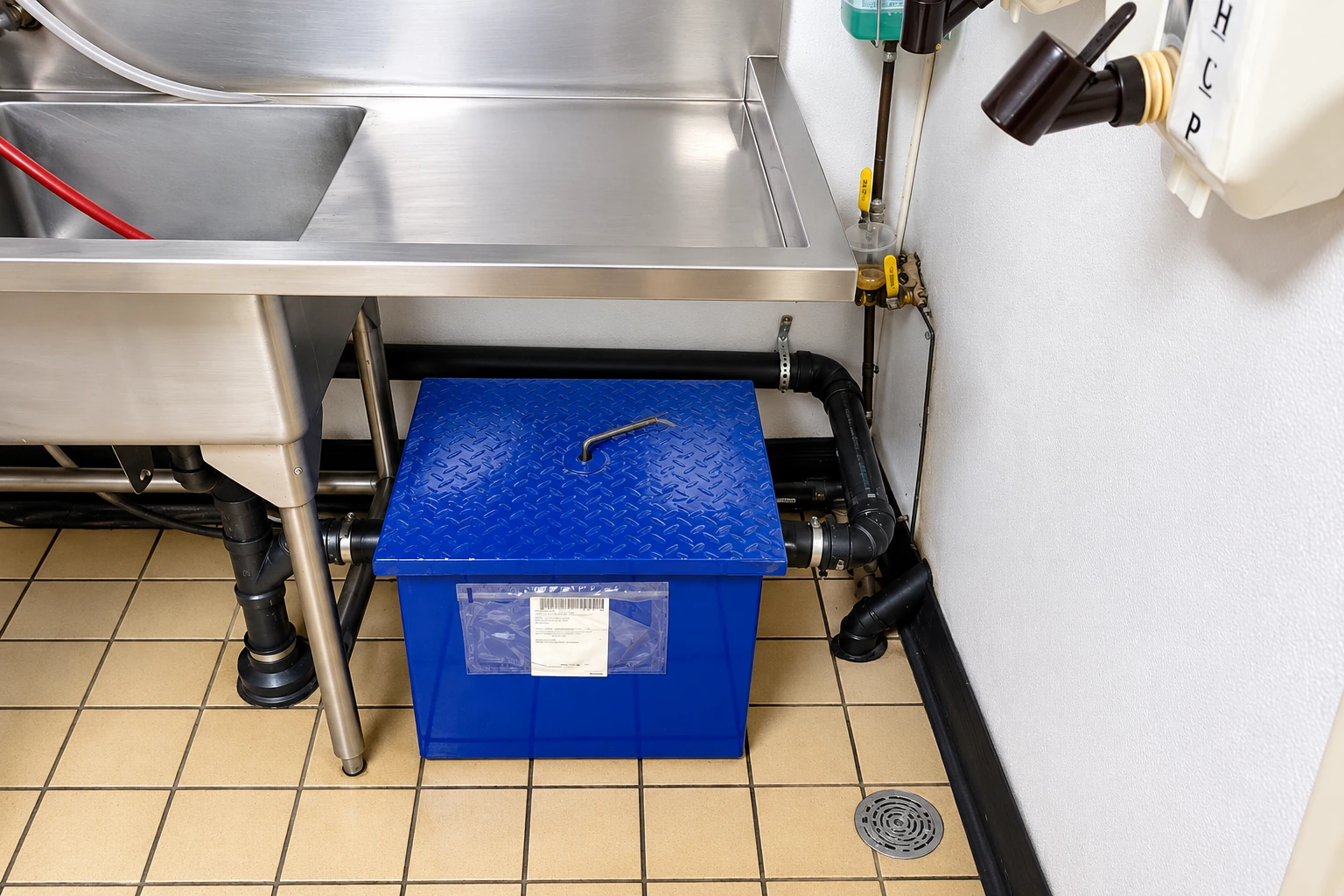
For a recurring drain problem, note whether it follows a particular process, cleaning activity or period of high use. Where grease-generating work occurs, review the disposal arrangements with the responsible people. City of Saint John: wastewater treatment and disposal guidance directs fats, oils and grease away from the sewer. This is a practical operating issue; it does not replace assessment of the property's equipment or any site-specific requirements.
Agree on protection, reinstatement and handover
Ask how the work area will be separated from occupants and what protection or cleanup is included. Identify responsibilities for opening finishes, moving equipment, returning the area to use and communicating any restrictions. Specialist hygiene or restoration work should not be assumed to be part of an ordinary plumbing repair.
At completion, request a clear record of the work, the area affected, checks performed and outstanding recommendations. Pass operating information to the people who use or maintain the equipment, not only the person paying the invoice. If the building contains several similar fixtures, identify the one serviced precisely. A usable handover helps prevent another shift or tenant from reporting an unresolved item as though nothing had been done.
References
- EPA WaterSense at Work: commercial water-management practices
- City of Saint John: wastewater treatment and disposal guidance
Your next step
Request an estimate with the location, scope and timing, or call 506.696.7000 to discuss the project.
Related services
Plumbing · Commercial Plumbing · Commercial Kitchen Plumbing